Hello everyone,
We hope you had some nice time off with your families for the Christmas holiday. Hopefully the New Year will bring some more fun for you all and some time on the water or at the tying vise.
I had a fun day out myself yesterday which served as proof of concept for the topic of our latest video. Throughout the day, I found water types where I caught a lot of fish on a dry dropper rig. In that same water, I did poorly with a Euro nymphing rig. As I moved to slightly different water types, the situation would often flip, and I would find water where the dry dropper was worthless but a Euro nymphing approach was successful. These locations were often only a few feet apart, but each was different. As the water velocity, surface choppiness, or the differential between currents at the top and bottom of the column changed, one rig or the other would become more effective.
In my opinion, learning to recognize water types where various rigs excel is one of the keys to improving trout fishing presentation in rivers. More specifically, if there aren't rising fish around and a nymphing approach makes the most sense, there are water types where a Euro nymphing/tight line approach will be best, and other water types where suspending a nymph or nymphs under a dry fly/indicator will be best. I've been able to watch a lot of competitors over the last year as a judge/controller and as a sector judge for the youth and women's world championship. Some competitors adapted to the water in front of them and used a rig that fit the water they were fishing well. Other competitors kept using the same nymphing rig regardless of the water type. You can guess which competitors were more successful.
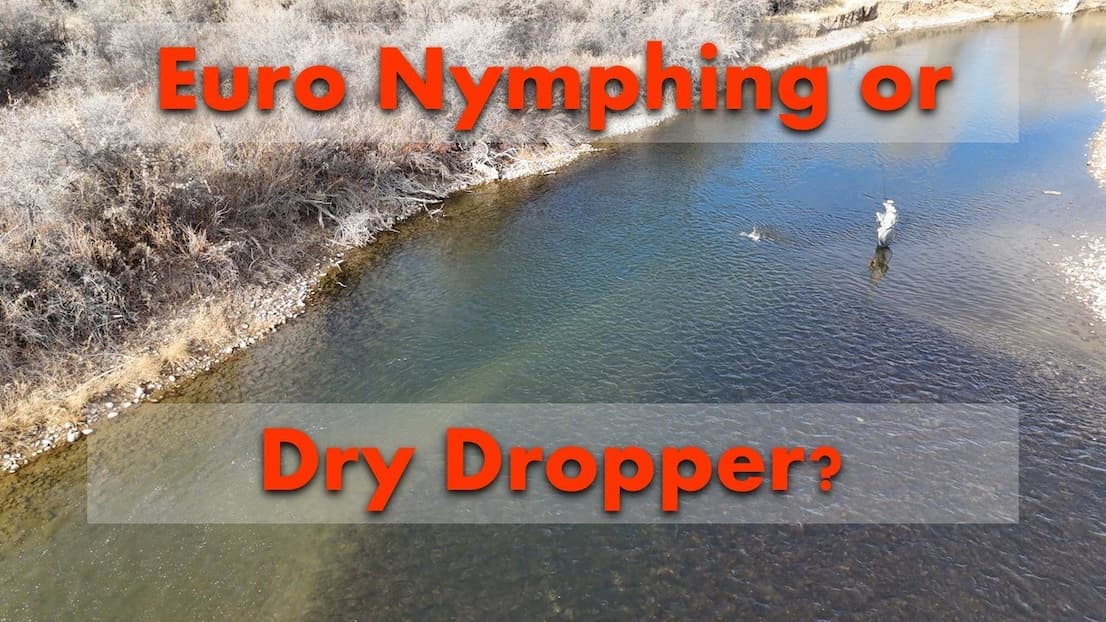
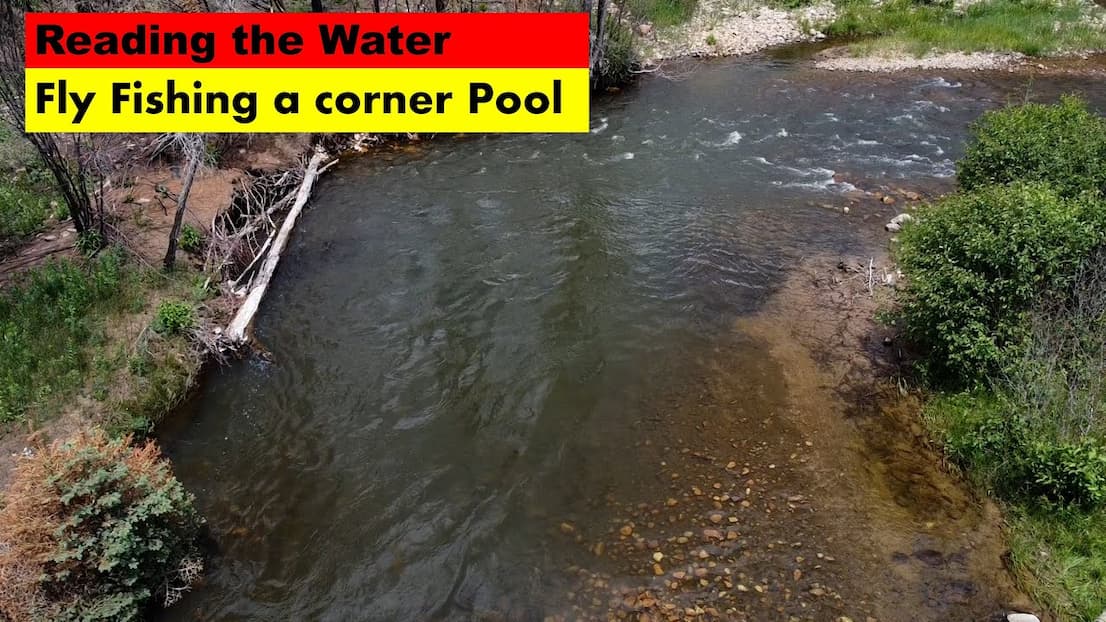
In our latest video, I wanted to illustrate what I look for when I decide between a dry dropper rig or a Euro nymphing rig. We went to a pool to demonstrate a typical situation where I swap back and forth between the two methods depending on the specific piece of water. Pay special attention to the surface current and the overall velocity at the locations where I use each rig in the video. While the pool is slow overall, there are subtle changes in water type that are best suited to one method or the other. I tried to highlight these changes with diagrams for each area of the pool. You can watch the video at this link or by clicking the image below.
|